



Common Mistakes to Avoid on the West Somerset Coast Path
Tides, mud, steep clay climbs and patchy waymarking catch out plenty of walkers on the West Somerset coast. Here are the mistakes to avoid and how to plan a safer day.
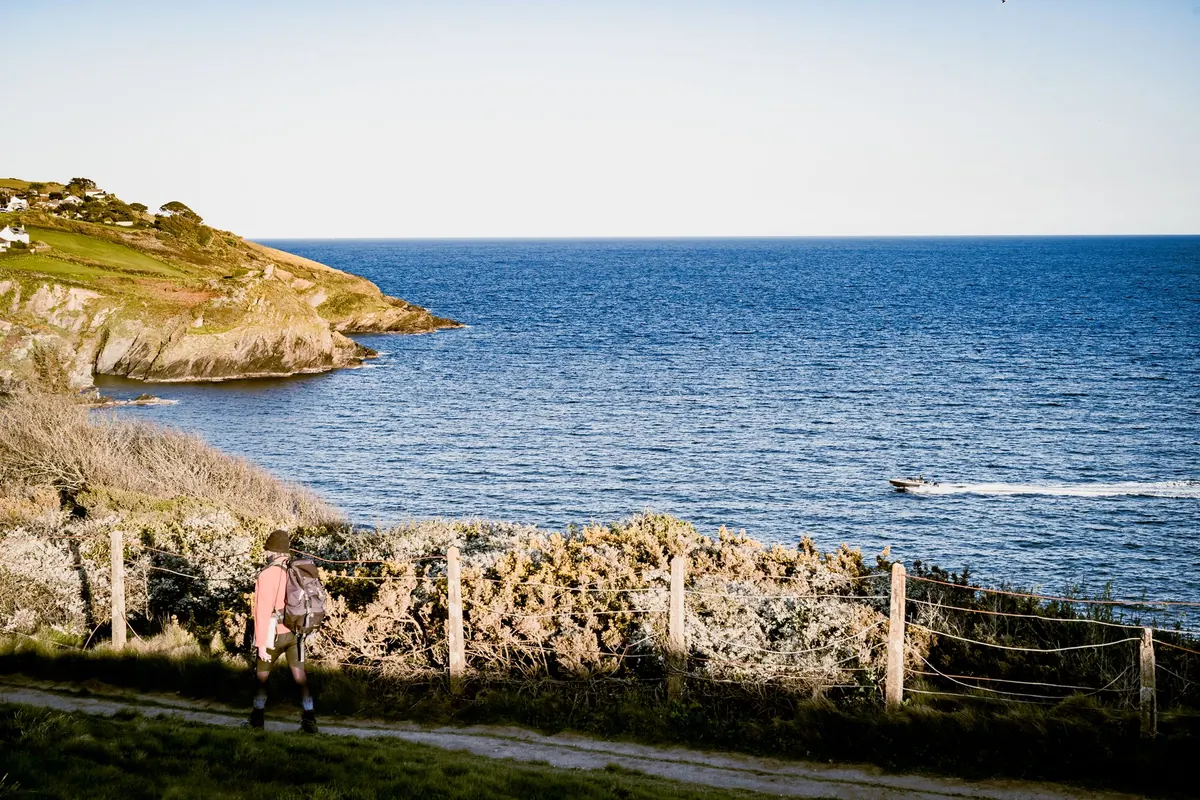
Most people who get caught out on the West Somerset coast path do not do it by being reckless. They do it by being twenty minutes late, by leaving the car at the wrong end, or by trusting the sand to be where it was last summer. The coastline between Minehead and the Parrett estuary is beautiful and genuinely manageable, but it rewards a bit of homework. Here are the mistakes that come up again and again, and what to do instead.
Mistake one: treating the tide as background scenery
The Bristol Channel has a huge tidal range, and around Blue Anchor, Kilve and the Steart flats the water does not arrive like a wave you can see coming and outrun. It creeps across shallow mud and sand, fills channels behind you, and cuts off the route back before you have noticed it moving.
Two habits keep people safe here. First, check the tide times for the day and the actual place you are walking, because Minehead, Watchet and the Parrett estuary do not turn at the same moment. Harbour noticeboards, HM Coastguard information and the standard tide tables give local times. Second, give yourself a wide margin. A useful rule on the flats is to be off them at least two hours either side of high water, and to head back the moment the water starts pushing in rather than when it looks inconvenient.
If the tide times are awkward, walk the clifftop path instead. It exists for exactly this reason.
Mistake two: assuming the beach is a shortcut
On a map, the sand looks like a flat, fast alternative to the path. On the ground it is often neither. The blue lias clay around Blue Anchor and the mud near Stolford and the Parrett can be deep, greasy and slow, and pulling a boot out of it takes more energy than climbing a hill.
There are other issues too. Some sections of foreshore are not public access, and the beach at Kilve and East Quantoxhead is protected for its geology and wildlife, so bashing across the rocks is not the harmless detour it feels like. Rockpools here are worth a look — just do it on a falling tide with the path behind you, not with a rising one between you and it.
Mistake three: underestimating the steep bits
This stretch does not have the long, brutal climbs of the Exmoor coast, which is exactly why people get careless. Instead it has short, sharp shocks: the drop into Watchet, the stepped sections around Helwell Bay, the pull up out of Blue Anchor, and the rolling, muddy climbs through the woods and combes between East Quantoxhead and Kilve.
What that means in practice
- Clay and wet leaves turn a gentle slope into a skating rink. Grippy footwear matters more here than on a big mountain.
- Steps are often uneven, eroded or half-buried. Eyes on your feet on the descents, especially when tired.
- Erosion is active. Sections of clifftop path narrow or slump after wet winters, so a route that felt fine last year may have moved.
- A walking pole is not overkill. It saves your knees on the descent to Watchet and steadies you on the slippery bits.
If you normally walk flat miles, halve your expectations. Eight miles here, with steps and mud, is a fuller day than eight miles on a towpath.
Mistake four: getting vague about the route
The path is waymarked, but waymarkers disappear into hedges in summer, and where a path crosses three fields and a lane, one missing arrow can cost you half an hour of wandering. Sections near Hinkley Point have been rerouted over the years, and diversions appear for construction and landslips, so old guidebook directions are not always reliable.
Carry a paper map of the whole stretch you are walking — the OS Explorer series covers it — and download an offline map to your phone. Signal is patchy in the combes and below the cliffs, which is the exact moment you will want it.
Mistake five: timing the day badly
Two things conspire here: daylight and transport. In winter, the useful walking window is short, and a late start plus a muddy clifftop means finishing in the dark on steps.
The second is getting home. The coast path is linear, so most people walk point to point using the bus or two cars. Out of season, and especially on Sundays, coastal services are thin and the last one can leave mid-afternoon. Check the timetable before you commit to a distance you cannot walk back from. Parking is another quiet trap: spaces at the popular car parks at Kilve, Watchet and Blue Anchor fill quickly on a sunny weekend from spring onwards.
And remember the wind. This coast is exposed and there is almost no shade on the clifftop. A steady headwind, or a hot still afternoon on the shingle, will slow you down far more than the profile suggests. Plan the harder half of the walk for when you are fresh.
Mistake six: dressing for a promenade
This is a coast path, not a seafront. Trainers with smooth soles, jeans, a cotton hoodie and one small bottle of water is a combination that turns a pleasant walk into a long afternoon. The weather changes fast, the wind off the channel is cold even in June, and there is nowhere to shelter between villages.
Take a waterproof that actually works, a warm layer, more water than you think you need, food, a charged phone and — in autumn and winter — a head torch. Tell someone where you are going and when you expect to be back.
Before you set off: a quick checklist
- Tide times checked for the specific beach you plan to use, with a two-hour margin either side of high water.
- Route, distance and nearest bus stops checked against a current map or timetable, not last year's notes.
- Footwear with real grip, plus a waterproof and a spare layer.
- Paper map and an offline map on a charged phone.
- A plan B, such as a shorter option via a village, if the weather turns or legs give out.
One safety note worth repeating: on this coastline, the sea and the mud are the hazards, not the hills. If you see someone in difficulty in or near the water, call 999 and ask for the Coastguard rather than going in after them. And if you have a health condition that affects how far or how fast you can walk, or you are unsure whether a route suits you, speak to a qualified professional before you go.
Photo: Aleks Marinkovic / Pexels